Daily Maintenance and Care Guide for Dental Handpieces
Published Date: 15/07/2026
Category: Dental Instrument Operation & Maintenance
Tags: Dental Handpiece, Handpiece Maintenance, Dental Clinic Equipment Care
1. Introduction
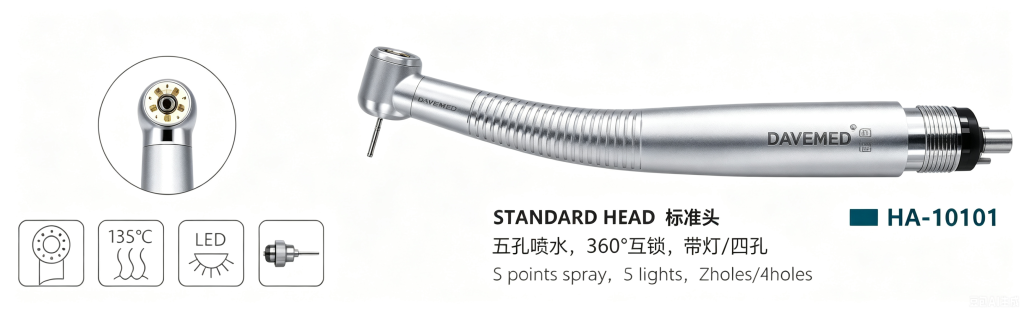
Dental handpieces are one of the most frequently used and essential precision instruments in every dental clinic. High-speed rotation, frequent disinfection, and long-time working make handpieces easy to wear, age, or fail if improperly maintained. Regular and standardized daily maintenance can effectively extend the service life of dental handpieces, ensure stable clinical performance, reduce failure rates, and help clinics avoid unnecessary replacement costs.
This guide covers complete daily maintenance, cleaning, lubrication, disinfection, and storage tips for dental high-speed and low-speed handpieces, suitable for daily clinic operation and routine equipment management.
2. Daily Cleaning Requirements (After Each Use)
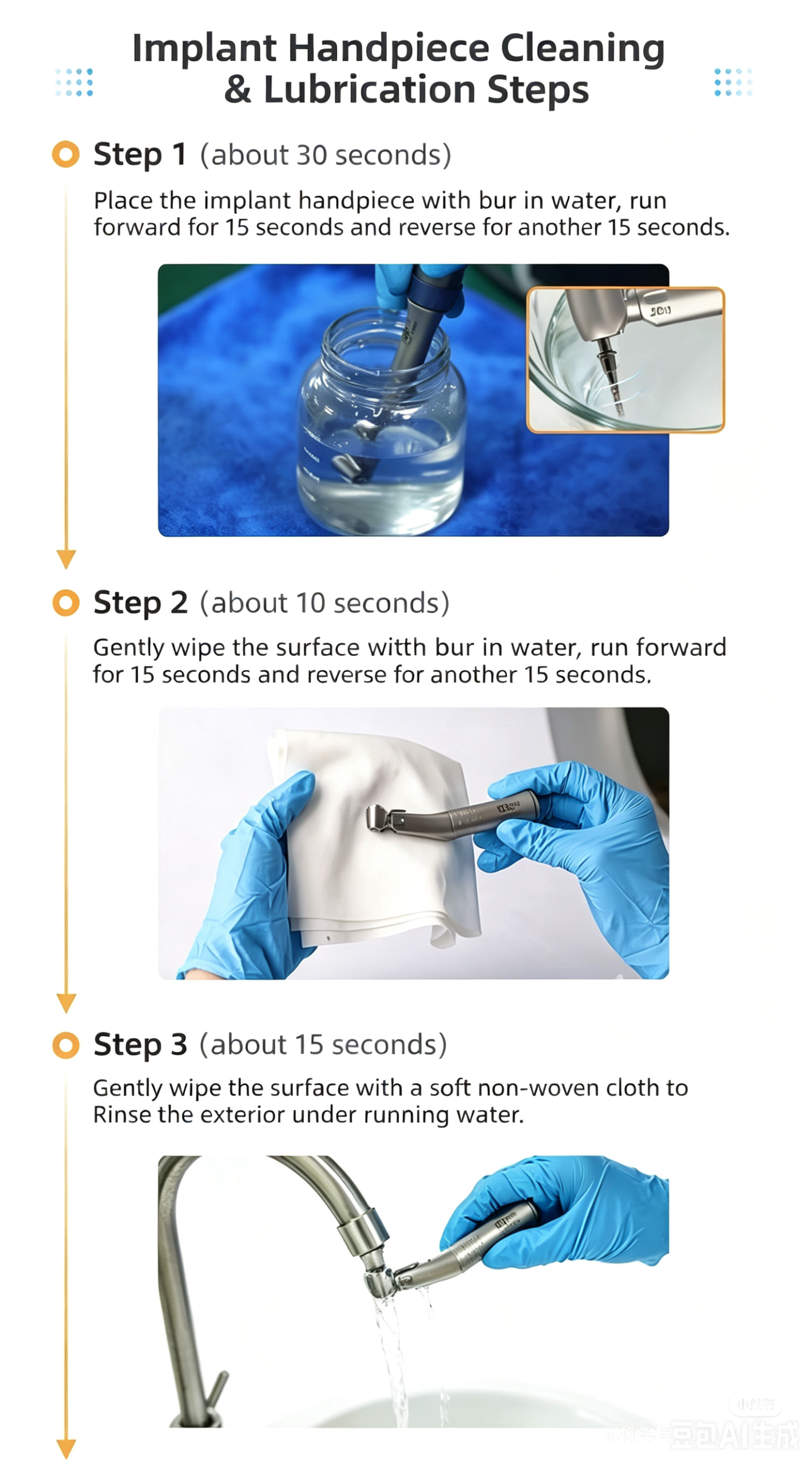
Cleaning is the first step of handpiece maintenance and directly affects disinfection safety and mechanical durability.
-
- Clean immediately after treatment After each patient treatment, wipe the handpiece surface with a professional medical disinfectant wipe to remove residual blood, saliva, and debris. Do not allow stains to dry on the handpiece surface.
- Avoid direct water flushing Do not rinse the handpiece directly with tap water. Excessive water entering the internal bearing structure will cause rust, bearing stuck, and rotation weakness.
- Clean the turbine and chuck Remove the dental bur and clean the chuck hole to ensure no residual debris. A clean chuck guarantees stable bur clamping and accurate rotation.
3. Standard Lubrication Procedure (Critical for Service Life)
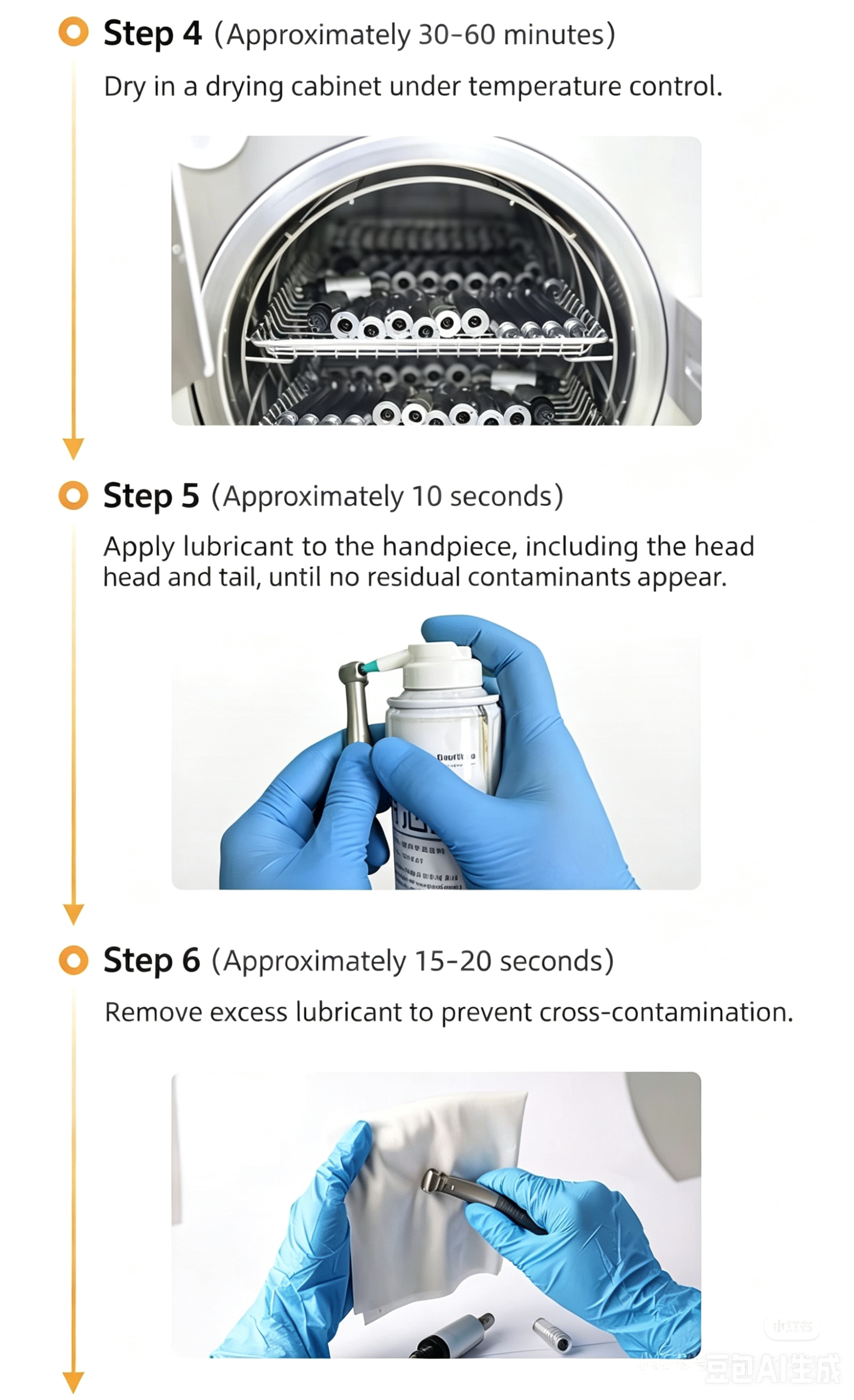
Lubrication is the core of handpiece maintenance. High-speed handpiece bearings run at 300,000–400,000 RPM, and dry friction will quickly damage internal precision parts.
-
- Lubrication frequency Lubricate the handpiece before each disinfection and after every clinical use.
-
- Use dedicated handpiece oil Only use professional dental handpiece lubricating oil. Do not use ordinary mechanical oil, which will cause internal clogging, poor heat dissipation, and loud noise.
-
- Correct operation steps Fix the handpiece, inject oil into the air inlet, and idle the handpiece for 3–5 seconds to evenly distribute the oil inside the turbine and bearings. Wipe off excess oil on the surface before sterilization.
4. Disinfection and Sterilization Standards
Dental handpieces must be strictly sterilized to meet medical infection control standards.
-
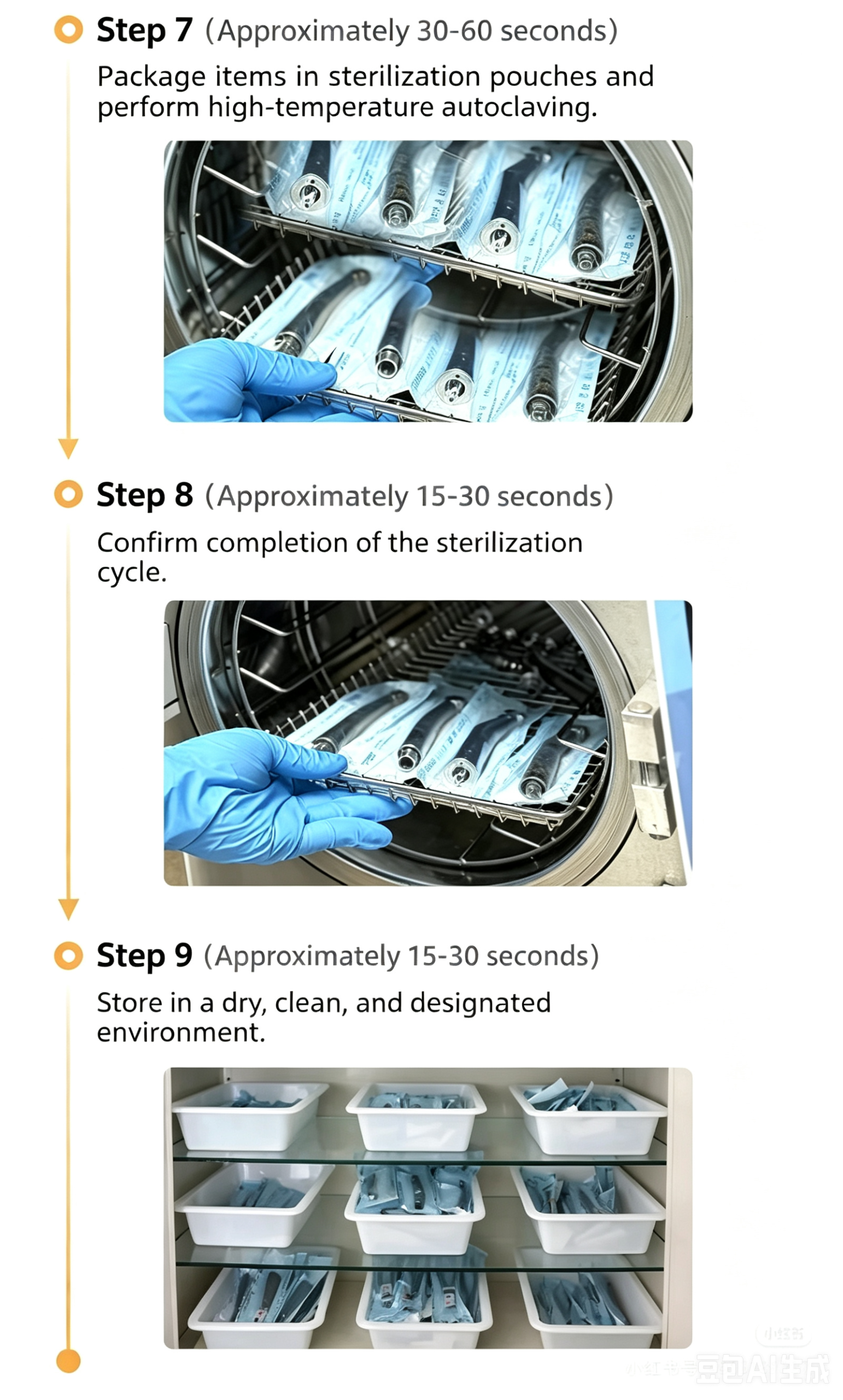
- Autoclave sterilization only All dental handpieces support high-temperature and high-pressure autoclave sterilization (134°C / 121°C). Avoid chemical soaking disinfection, which may corrode internal metal structures and seals.
-
- Do not over-stack during sterilization Place handpieces loosely in the sterilization tray. Extrusion and collision during high-temperature sterilization will cause deformation and precision loss.
-
- Fully dry after sterilization Take out the handpieces after sterilization and ensure complete drying before storage to prevent internal moisture from causing rust.
5. Daily Inspection & Troubleshooting
Daily quick inspection helps clinics discover potential problems in advance and avoid sudden equipment failure during treatment.
-
- Check rotation stability Idle the handpiece to check for jitter, deviation, or abnormal noise.
-
- Check water and air supply Confirm the water spray is uniform and the air pressure is stable.
-
- Check bur clamping Ensure the chuck tightly clamps the bur to prevent bur falling off during operation.
Common minor faults:
-
- Weak rotation: Insufficient lubrication or aging bearings
-
- No water spray: Blocked water pipe or residual debris
-
- Loud noise: Dry friction or internal foreign matter
6. Scientific Storage Habits
-
- Store handpieces in a dry, dust-free, and ventilated environment.
-
- Avoid long-term extrusion, drop impact, and high-temperature exposure.
-
- Do not keep used and cleaned handpieces mixed to avoid secondary contamination.
7. Why Standard Maintenance Matters
A well-maintained dental handpiece can maintain stable rotation accuracy, low noise, low vibration, and consistent cooling effect during long-term clinical use. Good daily care can extend the service life by 30%–50%, greatly reducing clinic equipment replacement costs and improving patient treatment experience.
8. Professional Handpiece Supply & OEM Service
We provide high-quality dental high-speed handpieces, low-speed handpieces, and handpiece maintenance accessories with stable performance, high temperature resistance, and long service life. We also support custom OEM & ODM services for global dental clinics, distributors, and dental equipment brands.
If you need product parameters, bulk pricing, or customized solutions, feel free to contact us for professional support.